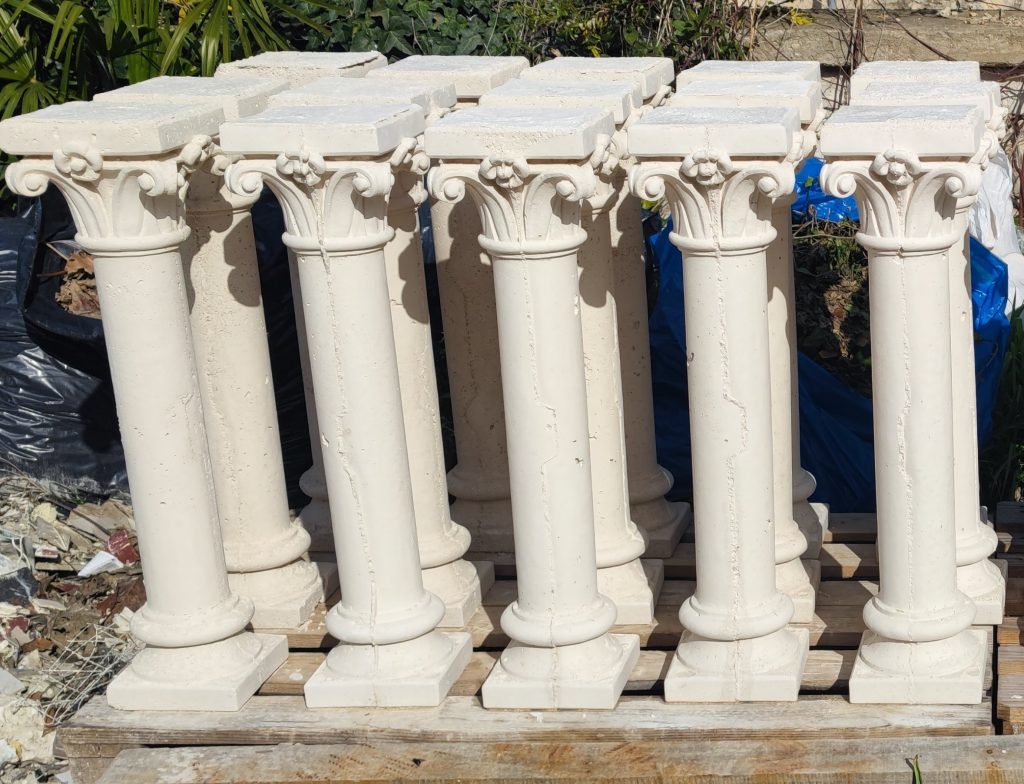
What I never expected was that making balustrades would take months, beginning with moulds and ending with the casting of 180 pieces.
For all the compromises we were forced to make, there was one part of the renovation where we would not give in.
The balustrades.
The original villa had been damaged beyond simple repair. Time, neglect and earlier interventions had taken their toll. Replacing them with something modern would have been easy. Cheaper. Faster. Widely accepted.
It was never an option.
These balustrades were part of the building’s identity. Remove them and the house would lose its voice. So instead of asking what could be bought, we asked a different question.
Who could still make them?
The answer did not come quickly. It took conversations, recommendations and a fair amount of scepticism. Eventually, we found someone willing to try.
The process was slow and exacting. First, we selected the best surviving originals. From those, moulds were made by hand. Every curve, every imperfection, every sign of age was captured rather than corrected.
Then came the casting.
One by one, over 180 balustrades were poured. Cured. Released from their moulds. Inspected. Rejected or accepted. There was no production line, no automation. Just repetition, patience and craft.
It was messy, physical work. And it was deeply human.
Some pieces cracked and had to be redone. Others emerged perfect on the first attempt. The rhythm was dictated by material and weather, not deadlines.
Watching this process felt like stepping back in time. This was not a lost skill. It had simply been waiting for a reason to exist again.
When the balustrades were finally installed, something shifted. The villa looked whole in a way it had not for decades. Not new. Not old. Just itself.
This was local skill at its best. Not efficient. Not scalable. But meaningful.
It reminded me why this project mattered.
Because preservation is not nostalgia. It is continuity. And sometimes, choosing the harder path is the most modern decision you can make.