
The world is changing. Governments are going in opposite directions.
I am writing this from Croatia, where the temperature hit 40 degrees this week. Again.
The global picture this week is striking, and not in a good way.
Right now, the Danube is at its lowest recorded level. In Budapest, the river has dropped so low that World War II munitions are being found on the exposed riverbed. Hungary’s Paks nuclear plant, which supplies nearly half the country’s electricity, has been forced to cut output because there is not enough river water to cool its reactors. Romania’s Cernavodă plant has shut down a reactor for the same reason.
This vulnerability has been documented since the 2003 European heatwave. It happened again in 2019, 2022, 2023, and now repeatedly in 2026. No engineering solution has been deployed at scale to address it.
This is the uncomfortable truth about nuclear power as a low-carbon backbone: the plants promoted as reliable alternatives to fossil fuels become less reliable precisely during the climate-driven events they are supposed to help us manage.
Meanwhile, the world’s two largest economies are moving in opposite directions.
In the United States, the current administration has withdrawn from the Paris Agreement, called climate change a “con job” and blocked billions of dollars earmarked for clean energy projects. Legislation passed last year rescinded most clean energy grants and phased out wind and solar tax credits, just as fossil fuel regulations were rolled back.
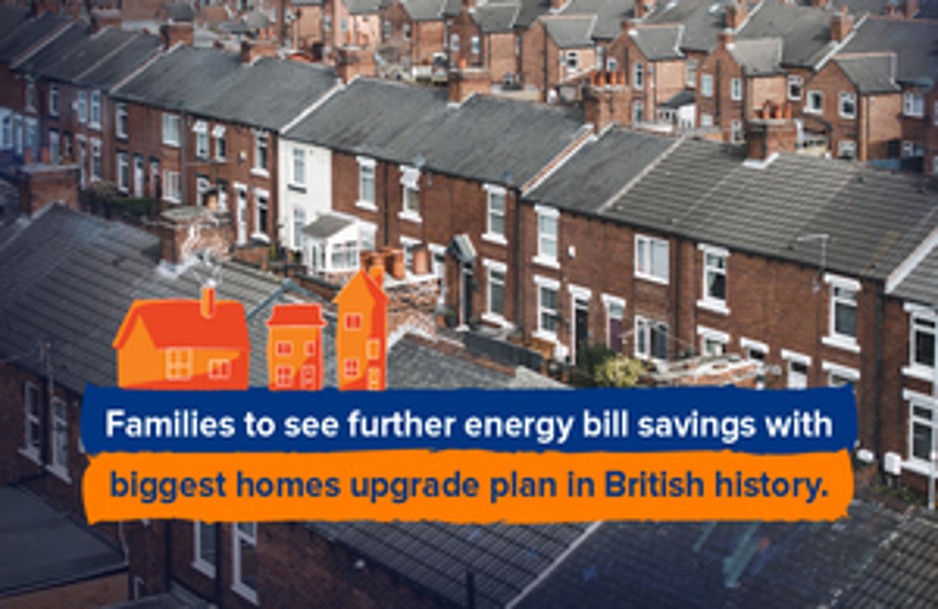
In the UK, the direction is different. Under its Warm Homes Plan, the government has committed £15 billion, the largest public investment in upgrading British homes to date to upgrade up to five million homes by 2030. The programme supports solar panels, batteries, heat pumps and insulation. The government has also relaxed some planning rules for heat pumps and EV chargers, including installations involving blocks of flats and private landlords, and says it will consult on further planning flexibility.
And what about Europe, and Croatia specifically?
The EU has made a notable shift in how it talks about all of this. The European Commission’s 2026 work programme, titled “Europe’s Independence Moment,” has reframed the energy transition as a matter of strategic and economic survival, not just environmental policy. The language has moved from “saving the planet” to “energy sovereignty.” Whether that framing helps or simply sidesteps the harder conversation is worth watching.
In 2025, renewables provided nearly half of EU electricity for the first time, surpassing fossil fuels. The direction of travel is real. But the politics inside member states are complicated.
Croatia is a useful case study, because it holds a genuine contradiction.
Croatia has set a target of raising renewables to 42.5% of gross final energy consumption by 2030. Its long-term low-carbon strategy projects a renewable share of between 53.2% and 65.6% by 2050, depending on the scenario. Solar deployment accelerated sharply in 2025, with 417 MW commissioned over the twelve months to December. Cumulative capacity passed 1 GW and reached approximately 1.26 GW, bringing solar close to overtaking wind. Much of this growth has come from commercial and industrial users seeking protection from unusually high business and wholesale electricity prices.
At the same time, the government is pursuing a broader and potentially conflicting energy strategy. It is expanding the Krk LNG terminal and associated gas infrastructure, while Parliament adopted a civil nuclear-energy development law in May 2026. A government working group is examining conventional reactors and small modular reactors. These policies do not prove that renewables have been abandoned, but they show that gas security and nuclear power occupy substantial places alongside them.
Regulatory uncertainty over grid-connection charges delayed approximately 3.5 GW of proposed renewable and storage projects for about three years. HERA (Croatian Energy Regulatory Agency) finally adopted new connection fees in April 2026, potentially removing that particular obstacle, although grid capacity, permitting and financing remain important constraints.
The stakes are particularly high for Croatia. Around a quarter of its economy is concentrated in sectors potentially vulnerable to climate change, including tourism and agriculture. Tourism alone represents roughly one-fifth of GDP. Hotter summers, drought, extreme weather and growing coastal risks therefore threaten both the Adriatic environment and one of the country’s principal sources of income.
At 40 degrees, I can feel that personally this week. So can the tourists who came here expecting a holiday.
What this series is about
Most people I speak to feel something between mild anxiety and genuine powerlessness when the subject of climate change comes up. It feels too big, too expensive and too slow to change. Governments argue. Scientists publish reports. Rivers dry up. Buildings bake. And ordinary people wonder what they are supposed to do about any of it.
Over the coming weeks, I will be exploring what individuals can actually do, what good policy looks like, why the design of buildings and public spaces matters more than most people realise, and how experience, design and energy connect directly to the quality of life we are building for ourselves and the people who come after us.
I am not going to pretend it is simple. But I do not think it is as hopeless as it sometimes feels. Someone has to start saying that out loud.
More next week.
What does 40 degrees feel like where you are? I would genuinely like to know.